
Residential Solar Plant Solution
Overview
A Residential Solar Power System is a rooftop solar installation on a house that generates electricity using sunlight. Under Net Metering, any excess power generated is sent back to the grid, and the consumer receives credits on their electricity bill.
Types of Solar Systems
- On-Grid (Net Metering): Connected to the utility grid. Ideal for homes with stable grid supply.
- Off-Grid System: Includes battery storage. Perfect for remote locations without reliable electricity.
- Hybrid System: Combines grid-tied system with battery backup for power outages.
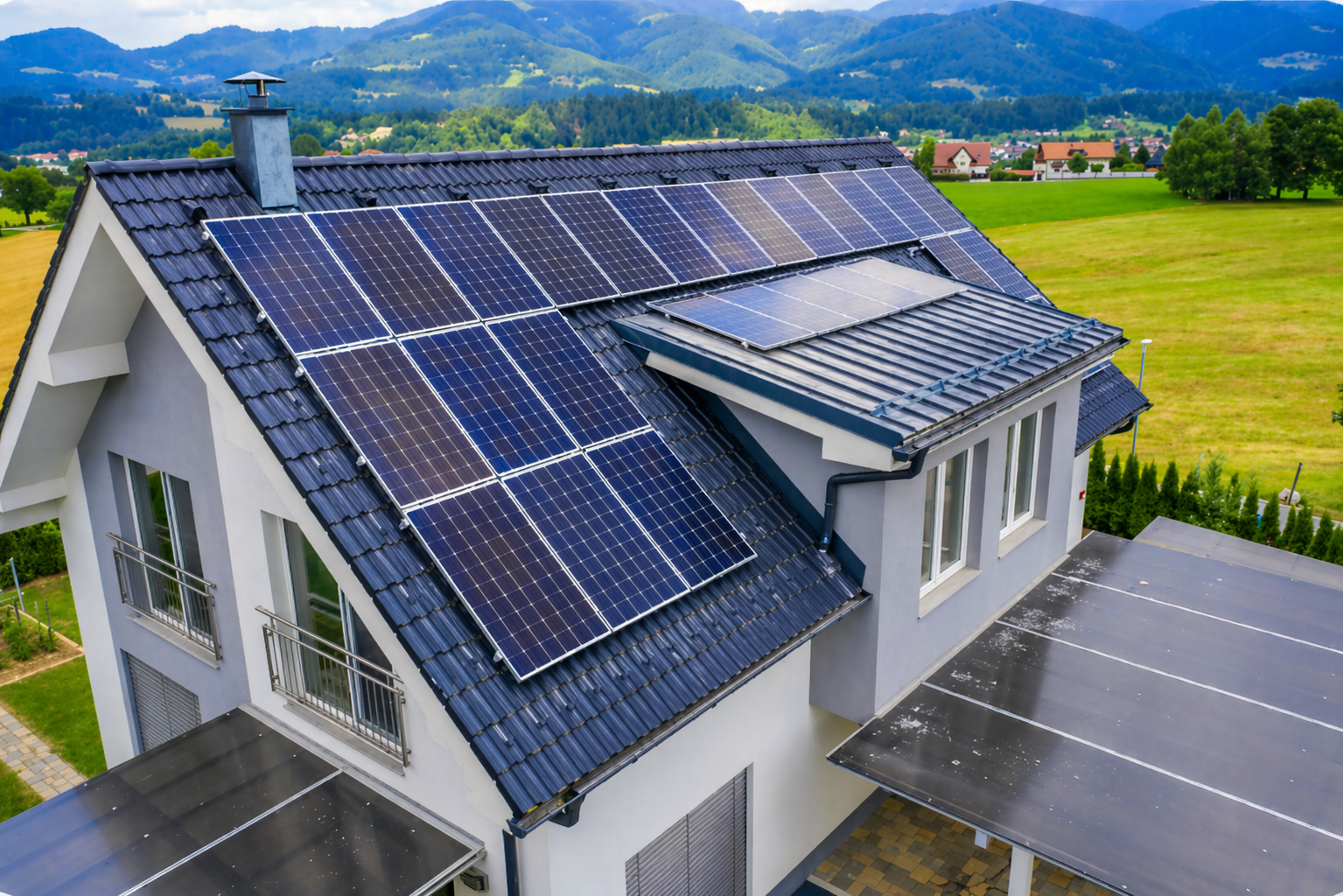
(A) On-Grid Solar System
Components
- Solar Panels (Poly or Mono-crystalline)
- Inverter (String or Micro-inverter)
- Net Meter (for measuring grid export/import)
- Mounting Structure (non-drill options available)
- ACDB/DCDB, Earthing Kit, Cables
- Optional: Battery Backup (Li-ion or Lead Acid)
Typical System Sizes & Requirements
| Size | Roof Area Needed | Avg. Monthly Generation | Avg. Savings/Month |
|---|---|---|---|
| 1 kW | 100 sq. ft. | 110–130 units | ₹800–₹1,000 |
| 3 kW | 300 sq. ft. | 330–390 units | ₹2,400–₹3,000 |
| 5 kW | 500 sq. ft. | 550–650 units | ₹4,000–₹5,000 |
Investment & Payback
- Cost per kW: ₹65,000 – ₹70,000 (post subsidy)
- Govt Subsidy: ₹85,800/kW up to 3 kW, up to 10 kW (as per MNRE Residential Solar Rooftop Scheme)
- Payback Period: 3–5 years
- Lifespan: 25 years+
Benefits
Installation Method (For Tin Shed Homes)
No-drill Mounting Structures using:
- Clamp-based solutions
- Ballasted structures
- Pre-engineered lightweight frames with anti-rust coating
Net Metering Process
- Apply to DISCOM via online portal
- Feasibility approval
- System installation by empanelled vendor
- Inspection and net meter installation
- Commissioning and monitoring
(B) Off-Grid Solar Plant
An Off-Grid Solar Plant is a standalone system that works without any connection to the electricity grid. It uses solar energy during the day and battery storage to supply power at night or during cloudy days.
Main Components
- Solar Panels
- Off-Grid Inverter (with inbuilt charge controller)
- Battery Bank (Lithium-ion or Lead Acid)
- Mounting Structure
- ACDB/DCDB, Earthing & Cabling
- Optional: DG Set Integration
How It Works
- Solar panels generate electricity in daylight.
- Electricity powers home appliances directly.
- Excess solar power is stored in batteries.
- At night or cloudy times, power comes from the battery bank.
Typical System Sizes
| System Size | Avg Daily Load | Battery Bank | Roof Area Needed |
|---|---|---|---|
| 1 kW | 3–4 kWh | 2–3 kWh | 100 sq. ft. |
| 3 kW | 10–12 kWh | 6–10 kWh | 300 sq. ft. |
| 5 kW | 15–20 kWh | 10–15 kWh | 500 sq. ft. |
| 10 kW | 30–40 kWh | 20–30 kWh | 1000 sq. ft. |
Costing & Payback
| System Size | Approx. Cost | Battery Type | Payback |
|---|---|---|---|
| 1 kW | ₹85k–1.1L | Lead Acid | 4–5 yrs |
| 3 kW | ₹2.5L–3.5L | Li-ion | 4–5 yrs |
| 5 kW | ₹4L–6L | Li-ion | 4–5 yrs |
*No government subsidy (usually) for off-grid except under special rural electrification schemes. *Battery replacement needed every 5–10 years depending on type.
Suitable Applications
- Villages / Remote Homes
- Farms / Agricultural Pumps
- Small Schools / Clinics
- Homesteads or Villas with poor grid supply
- Mobile installations (construction, border areas)
Advantages
- Independence from grid power
- Backup during grid failure
- Works in remote areas
- Long-term savings
- Scalable (battery & panel upgrades possible)
- Ideal for rural electrification projects
Installation on Tin Shed Roof
- Uses clamp-based or ballasted structures
- Avoid drilling using non-invasive Aluminum frames
- Ensure battery bank is stored indoors or in ventilated area
(C) Hybrid Solar Power Plants
A Hybrid Solar Plant combines the features of a Grid-Tied Solar System and an Off-Grid System. It uses solar panels, a battery bank, and connects to the utility grid. This allows you to:
- Use solar power during the day
- Store excess energy in batteries
- Draw from the grid only when necessary
- Export to the grid (optional)
System Components
- Solar Panels
- Hybrid Inverter (manages grid & battery)
- Battery Bank (Lithium-ion / Lead Acid)
- Bi-directional Net Meter (for grid export/import)
- ACDB/DCDB, Earthing Kit, Cabling & Mounting Structure
- Mounting Structures (with non-drill options for tin sheds)
System Design & Power Flow
| Time of Day | Source of Power |
|---|---|
| Day | Solar powers load + charges battery |
| Evening | Load runs on battery |
| Night | Battery + Grid (if needed) |
| Cloudy Days | Grid + Battery + Solar mix |
Typical Sizing
| System Size | Daily Load (kWh) | Battery Size | Roof Area |
|---|---|---|---|
| 3 kW | 12 units | 5–6 kWh | 300 sq. ft. |
| 5 kW | 20 units | 8–10 kWh | 500 sq. ft. |
| 10 kW | 40 units | 10–20 kWh | 1000 sq. ft. |
Cost & Economics
| Size | Approx Cost (INR) | With Battery | Payback Period |
|---|---|---|---|
| 3 kW | ₹2.2L–2.6L | Yes | 5–6 years |
| 5 kW | ₹3.5L–4.2L | Yes | 5–6 years |
| 10 kW | ₹6.5L–8.5L | Yes | 5–7 years |
*Subsidy: Available only for residential use (under MNRE guidelines), grid-tied portion eligible. *Battery cost makes hybrid slightly more expensive but ensures energy security during outages.
Advantages of Hybrid Solar
- 24×7 Power Supply
- Backup during Grid Failures
- Smart Energy Management
- Reduced Electricity Bills
- Compatible with Net Metering (partial export)
- Long-term investment with ROI of 15–20%
Use Case Scenarios
- Areas with frequent power cuts
- Hospitals, schools, offices needing uninterrupted power
- Remote locations with weak grid
- Homeowners wanting energy independence
Installation on Tin Shed Roofs
Use non-drill clamps, rail-based structures, or ballasted frames. Lightweight aluminum frames avoid rust and preserve the roof warranty.