

Solar Panel Dealer in Ranikhet: Choose the Right System for Lower Power Bills
Rising electricity tariffs and frequent hill power fluctuations make clean energy a dependable upgrade for homes and businesses across Kumaon. If you want to cut utility bills and secure uninterrupted power, finding a reliable solar panel dealer in Ranikhet is the essential first step. At Aditya Green Power (recognized across the region as a top solar energy specialist in Uttarakhand and India), we engineer high-performance systems designed specifically for mountain terrains.
Cut Power Costs With Solar Built for Ranikhet Homes
Ranikhet enjoys crisp mountain air and abundant high-altitude sunshine throughout the year. Because thin mountain air allows high solar irradiance, photovoltaic systems perform exceptionally well in the hills.
Why solar suits Ranikhet’s homes and small businesses with a certified solar panel dealer in Ranikhet
A certified solar panel dealer in Ranikhet can help you tap into cooler operating temperatures, which keep solar cells running at peak electrical efficiency. While heavy cloud cover slows output during monsoon months, solar panels still produce clean electricity during crisp winters and bright cool days.
Common hill properties that benefit include:
- Homes and holiday cottages wanting lower monthly power bills.
- Hotels and homestays aiming to trim commercial electricity overheads.
- Shops, schools, and offices needing steady power during peak working hours.
- Farms and remote outposts requiring off-grid independence.
The savings a well-sized system can deliver
A standard 3 kW rooftop system produces approximately 10 to 13 units (kWh) per day under clear sky conditions. Over a full calendar year, this setup generates roughly 3,600 to 4,200 units. Consequently, property owners can offset 60% to 90% of their annual utility costs.
Through grid connectivity and net metering, any surplus solar power produced during daylight hours flows back into the grid, earning energy credits that offset your nighttime consumption.
Why local installation knowledge matters in the hills
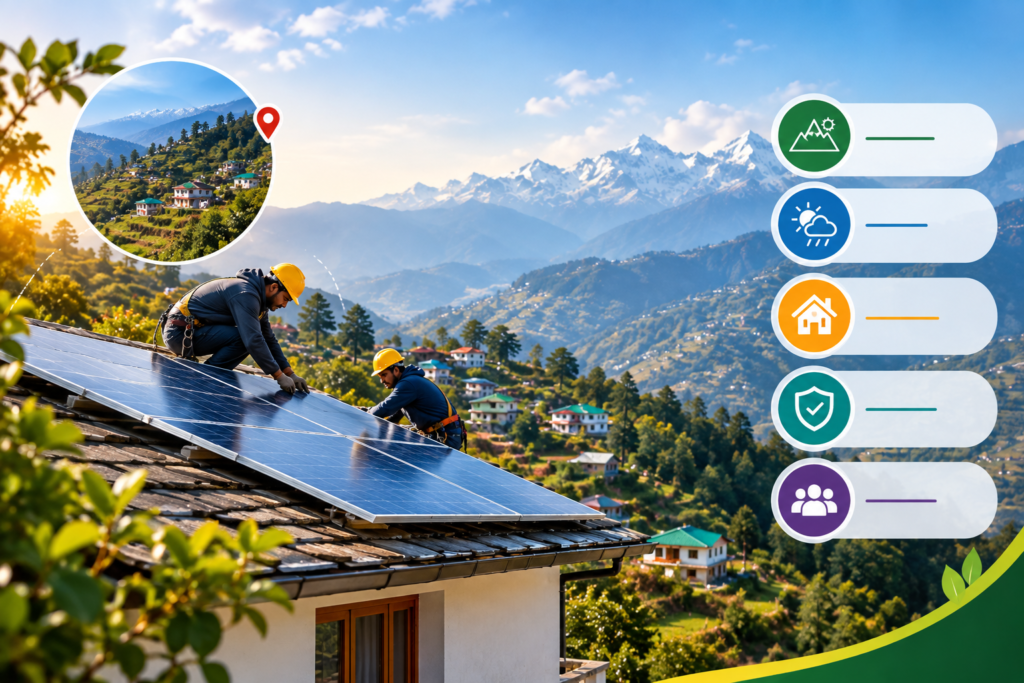
Installing solar systems in mountain regions requires engineering distinct from plains installations:
- Structural Pitch & Wind Loads: Ranikhet faces heavy rain, gusty ridge winds, and occasional frost. Mounting structures must use hot-dip galvanized steel or anodized aluminium anchored firmly into concrete or sloped roofs.
- Mountain Logistics: Transporting glass solar modules along winding hill roads demands protective packaging to prevent hidden micro-cracks.
- Electrical Safety: High-grade UV-protected, fire-retardant DC cabling and dedicated chemical earthing pits protect against mountain lightning and moisture damage.
Find a Trusted Solar Panel Dealer in Ranikhet
A long-term 25-year asset requires an installer with local experience and technical accountability.
Check dealer credentials and components with your solar panel dealer in Ranikhet
When consulting a solar panel dealer in Ranikhet, confirm their track record in Almora district. Ask to review local site photographs and verify how their equipment performs:
- Monocrystalline PERC / TopCon Panels: Best for compact roofs, delivering high efficiency even in low light.
- Bifacial Panels: Capture reflected light from both sides, ideal on open, reflective flat terraces.
- Solar Batteries: Solar-grade lithium ferro-phosphate (LFP) or tall tubular batteries provide reliable backup during power cuts.
Spotting a fair quotation
Never choose an installer solely based on the lowest price tag. Cheap quotes often omit essential safety hardware like surge protection devices (SPDs), DC disconnect isolators, or adequate chemical earthing.
Select the Right Solar System for Your Property
Choosing an appropriate system configuration ensures you do not waste money or run out of power.
Match system size to real power use
- 1 kW System: Ideal for small cabins running basic lighting, Wi-Fi, and a TV.
- 3 kW System: Recommended for standard 2–3 BHK homes running a refrigerator, washing machine, lights, and water pump.
- 5 kW System: Well-suited for large residences, cottages, and small cafes operating geysers and kitchen appliances.
- 10 kW+ System: Designed for hotels, homestays, and institutions with heavy daytime power demands.
Review your electricity bills from the past 12 months to account for seasonal spikes from winter room heaters and summer water pumps.
On-grid vs. Off-grid vs. Hybrid: Quick comparison
- On-Grid: Most affordable option for slashing UPCL bills. Note: On-grid systems automatically shut down during utility outages to protect line workers.
- Off-Grid: Runs entirely on batteries. Best suited for remote cabins where the grid is unavailable.
- Hybrid: Combines net-metered savings with a battery bank, keeping essential appliances running during grid cuts.
Understand Solar Prices, Subsidies, and Payback
Rooftop solar costs depend on system capacity, module technology, battery storage, and mountain transportation logistics.
Rooftop cost breakdown and PM Surya Ghar scheme
On-grid residential systems generally range between ₹60,000 and ₹75,000 per kilowatt, before applicable central subsidies. Hybrid systems with lithium battery storage cost more due to the energy storage hardware.
Under the PM Surya Ghar: Muft Bijli Yojana, residential consumers can secure central financial assistance for grid-connected installations:
- 1 kW: ₹30,000 subsidy
- 2 kW: ₹60,000 subsidy
- 3 kW to 10 kW: Up to ₹78,000 maximum subsidy
A 3 kW on-grid setup costing around ₹2,00,000 can be reduced to roughly ₹1,22,000 post-subsidy. Saving approximately ₹25,000 to ₹30,000 annually on utility charges allows the system to pay for itself in 4 to 5 years, providing over two decades of free electricity.
Installation, Service, and Real-World Examples
A quality solar installation follows a structured process to ensure safety and long-term durability.
Step-by-step installation journey
- Site Inspection: Assess roof angle, pitch, tree shade, and electrical main panel capacity.
- System Design: Map panel layouts, inverter placement, and cable paths.
- Approvals & Portal Registration: File PM Surya Ghar subsidy documents and UPCL net-metering applications.
- Mounting & Wiring: Anchor mounting structures, run UV-resistant cabling, and connect earthing rods.
- Testing & Handover: Test system voltages, commission the bidirectional net meter, and deliver the handover warranty pack.
Case study: 3 kW residential setup in Chaubatia, Ranikhet
- Property: 3 BHK standalone residence.
- System: 3 kW on-grid setup with Mono PERC half-cut modules.
- Pre-Solar Bill: ~₹2,800 monthly average.
- Post-Solar Bill: Dropped to minimum meter connection charges (~₹250 to ₹400 monthly).
- Payback Period: Achieved in ~4.2 years, keeping electricity costs predictable despite regional tariff hikes.
Case study: 8 kW hybrid system for a Majkhali homestay
- Property: 6-room boutique homestay.
- Challenge: Frequent afternoon grid trippings during tourist peak season impacted guest comfort.
- Solution: 8 kW hybrid solar array backed by a 10 kWh lithium storage bank.
- Results: Diesel generator run hours dropped by 80%, reducing fuel expenses while providing silent, eco-friendly energy that guests value.
Frequently Asked Questions
1. Do solar panels work during cold Ranikhet winters?
Yes. Solar panels generate power from sunlight, not outdoor heat. Cooler ambient temperatures actually reduce electrical resistance, allowing panels to operate more efficiently on clear winter days.
2. Can I run heavy appliances like room heaters or water geysers on solar?
Yes, provided your system is sized correctly. A 5 kW or larger setup handles morning heating demands smoothly, especially when scheduled during peak daylight hours.
3. What maintenance does a rooftop solar plant require?
Maintenance is minimal. Rinse dust, pine needles, or pollen off the panels with water once or twice a month, inspect earthing connections before the monsoon, and check inverter LEDs periodically.
4. How long does UPCL net-meter installation take in Ranikhet?
The entire process—from initial site survey and national portal documentation to UPCL net-meter installation and commissioning—typically takes 3 to 5 weeks.
Choose Your Ranikhet Solar Partner With Confidence
Switching to solar in Ranikhet lowers overhead costs, shields your property from rising utility tariffs, and reduces environmental impact. As the leading solar EPC team in Uttarakhand, Aditya Green Power delivers tailored engineering, high-durability mounting structures, and reliable after-sales support across Kumaon.
Schedule an on-site roof audit with our technical team today to secure clean energy for your home or business.